No reflections? Too many reflections?
Photographing glass presents interesting challenges. A striking photo will define the edges (otherwise, how can you see the glass?) but avoid nasty reflections or highlights.
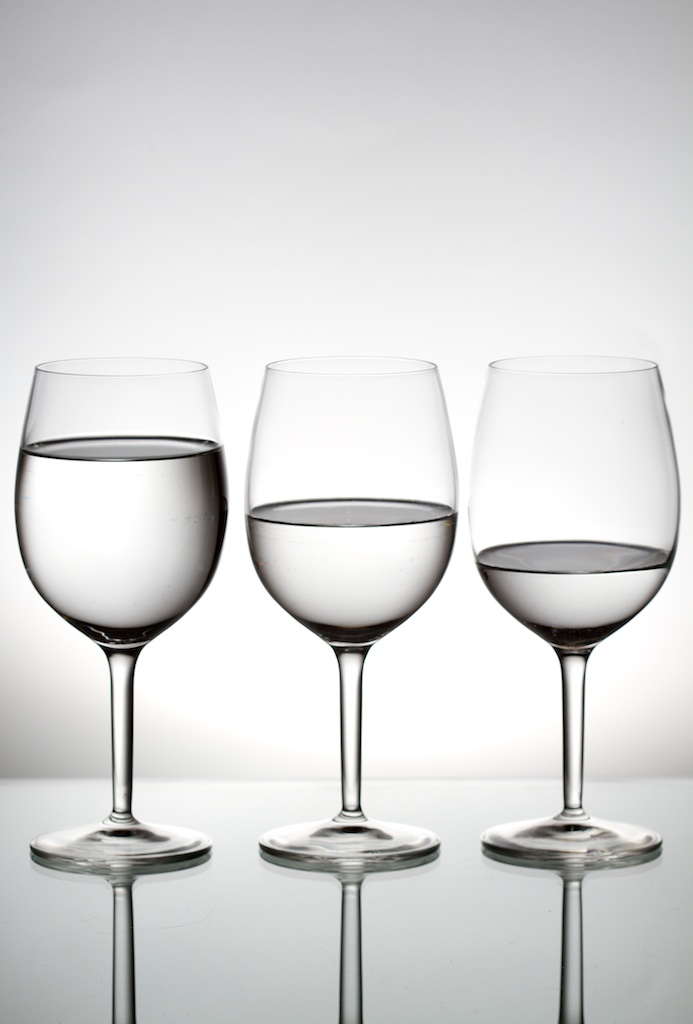
For this shot, I wanted 3 glasses on a white background, which means making the edges of the glass black. For extra challenge (read, headaches), I decided to throw in a reflection, then a liquid.
If you’d like to try this, here’s 3 tips to help you get started:
1. Keep the background separate
After some serious struggle, I finally learned that the paper had to be a foot behind the table. I first tried using a single sheet of white paper under the glass, flowing upwards to the back, but it was impossible to light evenly from the side and not get hotspots on the background or unwanted reflections on the glass.
2. Light the background, not the glass
Avoid putting any direct light on the glass. In this shot, the flash is underneath the horizon, between the table the glass is sitting on and the white paper background.
3. Use a large background for more glasses
When I added more glasses, suddenly more black appeared and it was inconsistent in each glass. I put a much larger white paper as a background to make sure that it filled each glass, no matter where it was in the shot.